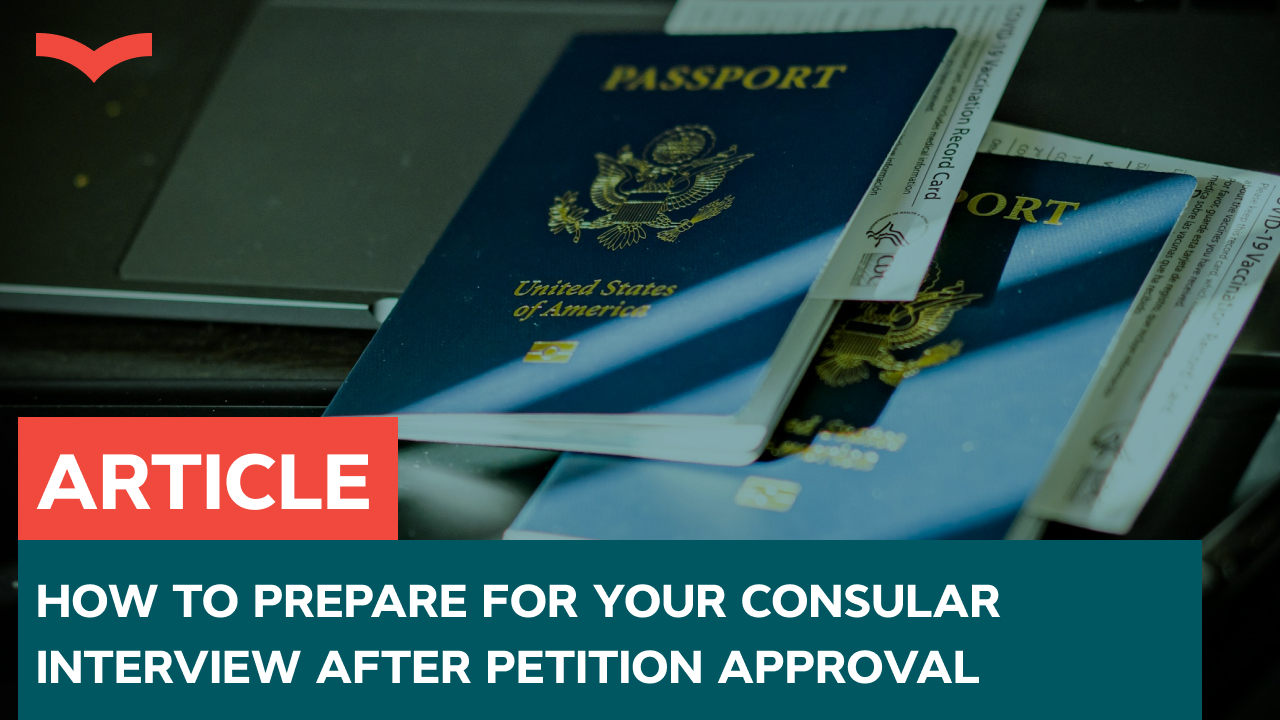
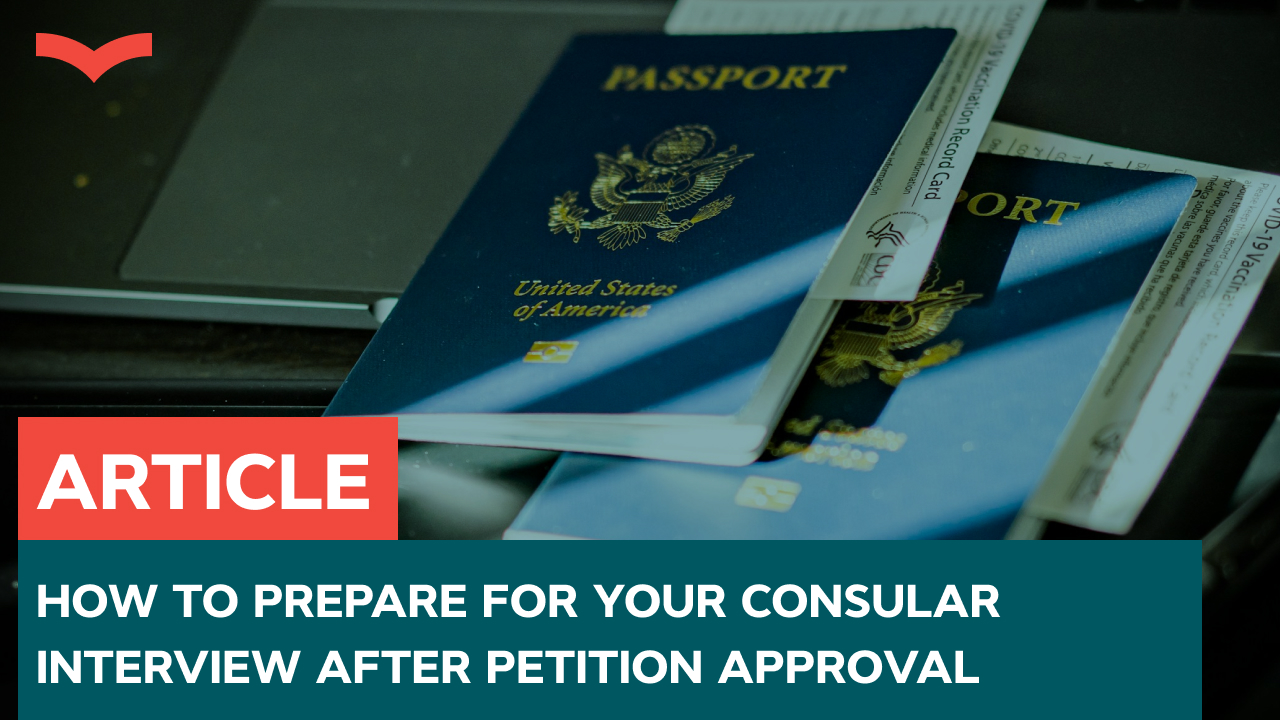
When a specialist receives petition approval from USCIS (U.S. Citizenship and Immigration Services), many feel that the hardest part is already behind them.
However, in practice, petition approval is not yet the final decision on your visa. This marks the beginning of the consular stage, where the applicant faces the U.S. consular interview. For many, this comes as a surprise – after all, the petition is approved, documents have been verified, yet questions and risks remain.
An interview after petition approval is an independent part of the process. The consular officer does not automatically issue a visa upon receiving an approval notice. They independently evaluate your application form, documents, answers, purpose of travel, and overall eligibility for the chosen visa category.
At the same time, you shouldn’t view the U.S. visa interview as an “exam.” Most often, the officer simply wants to make sure that you understand your own case, are telling the truth, and do not contradict the documents previously submitted.
What happens after petition approval
After petition approval, the applicant shifts from preparing the case to actively participating in the process. While attention was previously focused on documents and evidence for USCIS, the emphasis now moves to the application form, consular procedures, and the interview itself.
Next steps depend on your visa category. For some applicants, this means completing Form DS-160 for a nonimmigrant visa; for others, Form DS-260 for an immigrant visa process. Fees are then paid, a consulate is selected, and an interview appointment is scheduled.
Typically, the process unfolds as follows:
- Receiving the petition approval notice
- Completing the application form
- Uploading or preparing documents
- Scheduling the interview
- Undergoing a medical examination (if required)
- Preparing for the interview
At this stage, many applicants relax too early, assuming the main hurdle is cleared and the interview is a mere formality. However, this is precisely where additional questions, administrative processing, or requests for extra documents often arise.
Therefore, after petition approval, it is crucial not to “switch to wait mode,” but rather to calmly prepare for the next phase.
Differences in interviews across visa categories
The nature of the U.S. consular interview depends heavily on the category you are applying under.
For instance, an O-1 visa interview typically revolves around your professional activities. The officer will want to understand:
- Exactly what you do
- Why you were approved for this category
- Who your employer or agent is
- Where you will be working in the U.S.
- What your project or contract looks like
If your field is creative, scientific, athletic, or business-oriented, the officer may ask you to briefly explain the key achievements that grounded your petition.
An EB-1A interview looks different. Since this is an immigrant category, the consulate pays closer attention to your background, family documents, past travel history, overall narrative, and the general logic of your immigration case.
The distinction between categories is also important because for nonimmigrant visas, proving nonimmigrant intent and the temporary nature of your stay carries significant weight. The officer wants to know why you are going to the U.S. and how your plans align with the chosen visa category.
Which documents you need to prepare
One of the most common mistakes is bringing a massive binder containing every document imaginable. In reality, the officer values the logic and consistency of your case over sheer volume.
The basic document package usually includes:
- Valid passport
- Form DS-160 or DS-260 confirmation page
- Interview appointment confirmation
- Petition approval notice (Form I-797)
- Passport photos
- Category-specific visa documents
- Certified translations (if applicable)
If you are applying in a professional category, it is useful to have key supporting materials on hand:
- Awards and honors
- Publications and articles
- Contracts and invitations
- Employer letters
- Project descriptions
- Proof of prospective U.S. employment
For example, for an O-1 visa, the officer might ask to see a contract or deal memo from the U.S. party. For an EB-1A visa, documents verifying your achievements and professional status can be helpful.
Key takeaway: All documents must strictly align with what was previously stated in the petition and application form. Any discrepancies will raise immediate red flags.
What questions does the officer ask?
Many expect a rigorous interrogation, but most interviews last only a few minutes. However, a short interview does not mean a superficial check. The officer evaluates not only your answers, but also how confidently you navigate your own case.
Common questions cover:
- Your current work and role
- Professional achievements
- Your U.S. employer or agent
- Your project in the U.S.
- Travel timeline and duration
- Family background
- Plans after entering the country
For nonimmigrant categories, intent is particularly crucial. For example, the officer may ask where exactly you will work, how long you plan to stay in the U.S., and what you will do once the project ends.
If an applicant stumbles over their own story or gives answers that contradict the petition, it almost always leads to follow-up questions or delays.
How to answer questions correctly
A successful interview is neither a memorized speech nor an attempt to “please” the officer. The safest approach is to answer calmly, briefly, and to the point.
Three essential rules to follow:
- Do not contradict your petition.
- Do not exaggerate.
- Do not overshare unnecessary information.
For instance, if the officer asks what you do, there is no need to recap your entire 10-year career. Simply explain your specialization and your role in the project clearly. When asked about achievements, highlight a few strong examples rather than trying to list everything you have ever accomplished.
Another mistake is delivering mechanically memorized responses. Consular officers quickly spot when someone speaks in templates without truly understanding their own case. Interview preparation should focus on understanding your situation, not crafting a “perfect script.”
Potential risks and challenges
Even with a strong case, additional checks can happen. This does not automatically mean a refusal or a problem.
Sometimes, the consulate initiates administrative processing (221(g)). This usually relates to the need for extra verification of documents, background, field of expertise, or employer details.
Other common occurrences include:
- Requests for additional evidence or documents
- Re-evaluation of information
- Delays in passport issuance
- Clarification questions regarding the DS form or petition
Administrative processing in itself is not a negative result. However, lack of preparation and conflicting information can certainly complicate the process.
Common mistakes
In practice, most problems stem from improper preparation rather than a “weak” case.
Typical mistakes include:
- Poor memory of the petition content
- Answers inconsistent with the DS-160/DS-260 form
- Providing too much irrelevant detail
- Disorganized document handling
- Treating the interview as a mere formality
- Getting nervous and confusing simple facts
Some applicants assume that petition approval automatically guarantees visa issuance. However, the consular stage operates independently, and the officer makes their decision on their own authority.
That is why, prior to the interview, it is vital to review your case structure calmly, refresh your memory on key dates, double-check your documents, and think through potential questions in advance.
Conclusion
The consular interview following petition approval is the final check of your case before a visa is issued. At this stage, the officer evaluates not only the documents but also how consistent and cohesive your entire narrative is.
Good preparation doesn’t guarantee a positive outcome, but it significantly reduces the likelihood of typical mistakes, contradictions, and unnecessary complications. When a specialist thoroughly understands their immigration case, knows their documents, and answers questions with composure, the interview goes much smoother.
If you are preparing for a consular interview following an O-1, EB-1A, or other visa petition approval, the Shamayev Business Law team can help assess risks, review documents, and prepare you tailored to your specific case. Take advantage of a free evaluation of your visa situation to learn your chances and define your strategy.