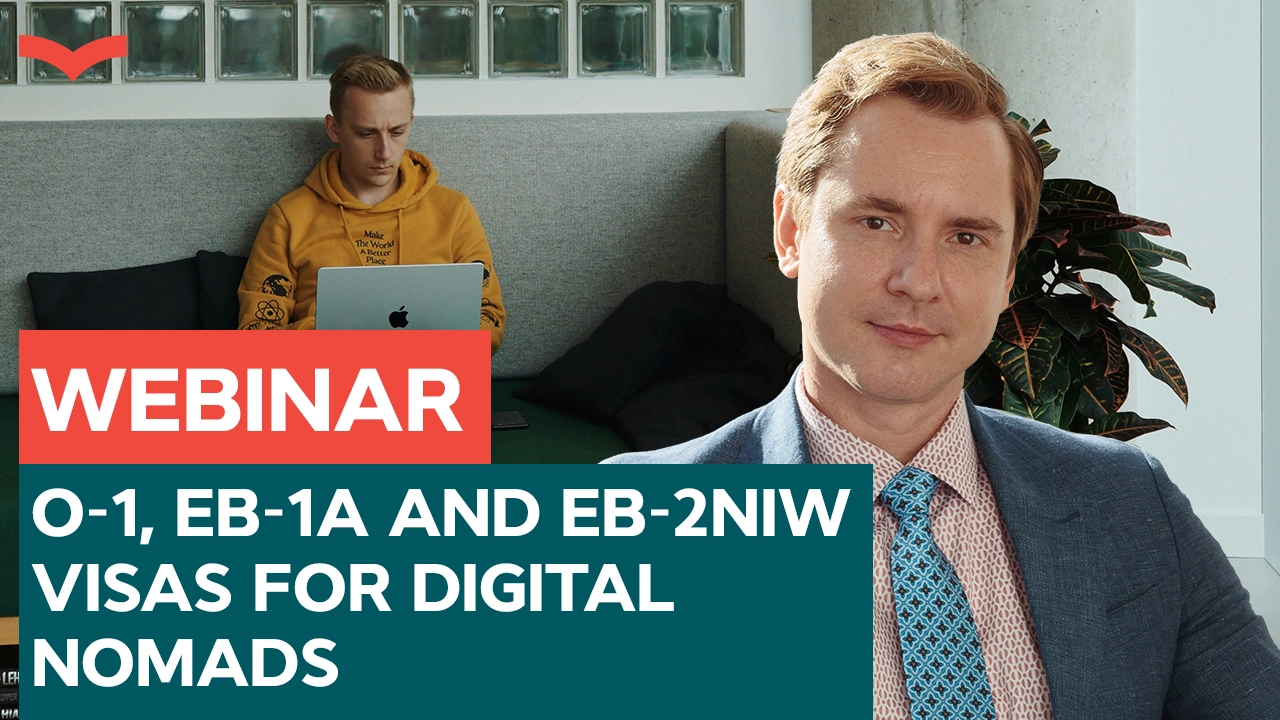

How to Choose the Right Visa Category for Your Profile
U.S. immigration law leaves very little room for abstraction. Every case has to be placed into a specific visa or green card category, and the evidence has to show that the applicant meets that category’s legal standard.
That is where strategy matters most.
A single candidate may appear to fit more than one path. A successful tech founder with patents and publications, for example, may have a plausible case for O-1A, EB-1A, and even EB-2 NIW. What matters most is identifying the category that offers the strongest chance of approval, the most sensible timeline, and the clearest long-term advantage.
Visa strategy goes far beyond matching a resume to a list of criteria. The category has to fit the record, the timing, and the story the evidence can support.
1. Start with the kind of excellence the record reflects
Before comparing legal criteria, it helps to begin with a more practical question:
What kind of achievement sits at the center of the case?
Profile A: Science and research
The record includes peer-reviewed publications, citations, patents, a PhD, or invitations to speak at academic or industry conferences.
Best fit: EB-1A and EB-2 NIW
Profile B: Business and leadership
The applicant is a founder, executive, or senior operator with a record of building companies, driving revenue, entering new markets, or attracting investment.
Best fit: O-1A, EB-1A in especially strong cases, and L-1 or EB-1C where the business structure supports that route
Profile C: Arts, sports, and media
The applicant is a director, musician, athlete, chef, designer, or other creative professional whose record includes awards, festival participation, touring, press coverage, or measurable commercial success.
Best fit: O-1B and, in some cases, EB-1A
Profile D: Highly skilled professional with a strong proposed endeavor
The applicant may not have major awards or broad name recognition, but has strong qualifications in a field such as engineering, biotech, green energy, along with a project that carries clear value for the United States.
Best fit: EB-2 NIW
Why this matters
Each category is built to recognize a particular kind of proof. A business case can sometimes be framed successfully under EB-1A, but doing so often requires a more carefully developed legal theory than an O-1A case, where business accomplishments tend to translate more naturally into the language USCIS already recognizes.
The core issue is alignment. Strong credentials alone do not decide the outcome. The structure of the category and the shape of the evidence have to work together.

2. The surrounding facts matter just as much
Once the profile is clear, the next step is to look at the practical setting in which the case will move forward.
Is there a U.S. employer ready to sponsor the process?
When a U.S. employer is prepared to sponsor, the available options may include:
- H-1B for temporary work
- EB-1B for outstanding professors and researchers
- EB-2 or EB-3 for standard employment-based sponsorship
In some cases, employer sponsorship offers the more straightforward route. In others, especially where independence and flexibility matter, self-driven categories such as EB-1A or O-1 may be more attractive.
Is the case being filed from inside the United States or from abroad?
If the applicant is already in valid status in the United States, such as F-1, H-1B, or L-1, a change of status may be possible without international travel.
If the applicant is outside the U.S., consular processing will usually become part of the strategy. That is entirely routine, but it still affects timing, sequencing, and overall case design.
How quickly does the move need to happen?
Timing often shapes strategy as much as the merits do.
O-1 is frequently the fastest option for highly accomplished professionals who need to begin working in the United States on a relatively short timeline, particularly when premium processing is available.
EB-1A offers the major advantage of a direct green card path, but it typically requires more time and a stronger body of evidence.
EB-2 NIW can also lead to permanent residence, though the overall timeline depends on petition processing, visa availability, and priority date movement.
3. The three most common options and who they fit best
O-1A or O-1B: a strong entry strategy
Best for: Professionals who need speed, flexibility, and a realistic first step into the U.S. market
O-1 is often a strong fit for applicants with solid credentials and a profile that is still developing. The record may already reflect substantial achievement, though not yet the kind of distinction that makes an EB-1A case a straightforward filing.
Why do people choose O-1?
Because the standard is often more workable, and many of the same documents used for EB-1A can also support an O-1 case. A well-prepared O-1 petition can open the door to the U.S. market much faster.
Strategic point: O-1 often works well as an initial step. It allows the applicant to enter the U.S., build local experience, secure contracts, expand a professional network, and strengthen the evidentiary record for a future green card case. For many applicants, that makes a later EB-1A petition significantly stronger.
EB-1A: the strongest self-sponsored green card path
Best for: Applicants with a clearly documented record of extraordinary ability
EB-1A is designed for people who can show they are at the top of their field through strong, objective evidence. That may include major awards, selective memberships, judging the work of others, original contributions, patents, publications, or a high level of recognition.
Why do people choose EB-1A?
Because it offers a direct path to permanent residence without tying you to a specific employer.
Strategic point: EB-1A rewards strong cases and punishes rushed ones. If the evidence is not there yet, it is often better to strengthen the record first than to file too early and deal with a denial that may affect future filings.
EB-2 NIW: the best option for many highly qualified professionals
Best for: highly qualified professionals with an advanced degree, or a bachelor’s degree plus at least five years of progressive experience, whose proposed work in the United States has clear importance
EB-2 NIW is often the right fit for scientists, engineers, physicians, researchers, and other professionals whose value lies in the substance of their work and the future impact of what they plan to do.
The applicant does not need widespread public recognition. What matters is a strong background, a credible proposed endeavor, and a clear explanation of how that work benefits the United States.
A strong résumé alone rarely carries the case. Qualifications, vision, and execution all need to be present in the petition.
Strategic point: The framing of the proposed endeavor is often decisive. A generic plan to continue working in the same profession usually falls flat. A clearly defined endeavor tied to an important national need is far more compelling.

4. A quick self-assessment
Here is a simple checklist to help you narrow the field. Answer each item with yes or no.
- I have at least one significant award or prize in my field.
- I have peer-reviewed scholarly publications.
- I belong to an association that admits members based on achievement or invitation.
- I have judged, reviewed, or evaluated the work of other professionals.
- I have patents that were licensed, implemented, or used in practice.
- I have a master’s degree or higher.
- I have a specific project or professional plan for the United States.
- I need to begin working in the U.S. soon.
- I have media coverage about me or my work.
- In my field, commercial success matters more than academic publishing.
How to read your results
- If you answered yes to many of questions 1 through 5, you may have the foundation for a strong EB-1A case. The next step is turning those credentials into a coherent legal narrative.
- If you answered yes to questions 6 and 7, and possibly 2 or 4 as well, EB-2 NIW may be a strong fit, especially if your proposed endeavor is clear and well supported.
- If you answered yes to questions 8, 9, and 10, or if you work in a creative field, O-1 may be the most practical option, particularly if timing matters.
- If you answered yes to almost everything, you may qualify for more than one strong path. In that situation, the best strategy usually comes down to timing, risk tolerance, and long-term goals.
Conclusion
Selecting the right visa category is a strategic decision. Long-term goals, timing, evidentiary strength, and the way USCIS is likely to view the case all play a role.
At Shamayev Business Law, that analysis goes beyond identifying a single possible fit. Each case is reviewed in context, risks are weighed carefully, and multiple paths are considered side by side: the fastest option, the strongest option, and the one best positioned for long-term growth.
The goal is a strategy that gives the case its strongest future.